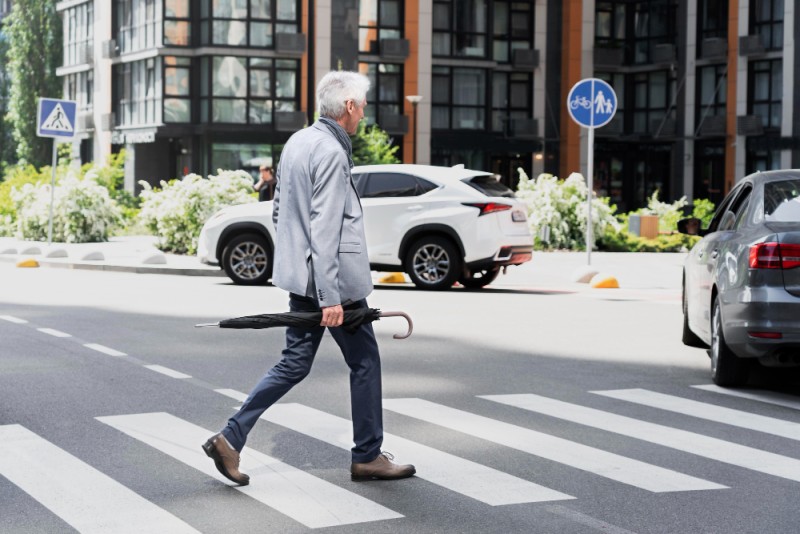
The safest and most convenient way to move around Los Angeles is supposedly by foot. But unfortunately, nowadays pedestrian accidents are on the rise in the city. These accidents often leave innocent victims with severe injuries, overwhelming medical bills, and emotional trauma, as well as lost wages.
We at The Shahbaz Firm believe at our core that one should not suffer the consequences of someone else’s mistake. Therefore, our pedestrian accidents law firm in Los Angeles helps you represent your case and provides all the possible legal support, from providing you medical support to proper compensation from the liable party in the accident.
If you or your loved one has been injured while walking on the road, you deserve the right guidance and assistance. Choose us for all the attorney support and discuss your case with confidence. Our team of pedestrian lawyers has years of experience fighting for fair compensation and protecting our clients’ rights.
Reasons for selecting The Shahbaz Firm for all legal support following a Los Angeles pedestrian accidents
Choosing the right legal support just after any pedestrian accidents is crucial to get proper help, compensation, and justice for your loss. Prioritize choosing the pedestrian accident attorney in LA who has years of experience dealing with such cases and has a proven success rate.
Here is the reason why you must choose The Shahbaz Firm as your legal support after a pedestrian accidents:
- Experienced Pedestrian Accident Lawyer Los Angeles: We have years of experienced lawyers that can fight for your rights and help you get maximum compensation for your loss
- Well skilled in dealing with complex cases: Pedestrian cases can be complex sometimes, involving multiple parties and different viewpoint witnesses. Our Pedestrian Accident Attorney in LA can simplify the process and deal with everything efficiently.
- We fight as a personal case: each of the cases we take in is a new challenge for us and we fight for you as our personal challenge. We understand your situation, understand your case, and then strengthen it according to legal procedures.
What we do as your legal support in the Pedestrian accident case
For The Shahbaz Firm, it’s not just about another case; it’s about the physical, financial, and psychological loss one has to go through for someone else’s mistake. It is completely unacceptable for us as well as for the law. When you hire our experienced and skilled pedestrian accidents lawyer in Los Angeles, they help you do the following:
What we do as your legal support in the Pedestrian accidents case
For The Shahbaz Firm, it’s not just about another case; it’s about the physical, financial, and psychological loss one has to go through for someone else’s mistake. It is completely unacceptable for us as well as for the law. When you hire our experienced and skilled pedestrian accident lawyers in Los Angeles, they help you do the following:
- We investigate everything in detail: Our expert attorney will investigate the accident in detail, leaving no room for any missing leads. It allows you to make your case strong and punish the culprit.
- Negotiate aggressively: Our expert lawyers are well-skilled in negotiating the compensation. Therefore, you're assured to get the maximum compensation from insurance companies who otherwise never settle their amount.
- Calculate the full value of damages: Whether it is medical bills, lost wages, physical or property damage, or even your pain and suffering, everything has a value and we calculate all these minor details to claim from the liable party.
- Represent you in court if needed: If the settlement and compensation process doesn't work outside court, we represent your case in court as well. Fight for your rights and help to serve justice with our most capable pedestrian accident lawyers in LA.
Pedestrian Accidents: When Walking Becomes Dangerous
You wouldn’t think something as simple as crossing the street could change your entire life. But it happens every single day.
Maybe you were in a crosswalk with the walk signal. Maybe you were walking through a parking lot to get groceries. Maybe you were jogging on the shoulder of a road. Doesn’t matter. All it takes is one distracted driver, one person who doesn’t look before turning, one person who decides the red light doesn’t apply to them.
The thing about pedestrian accidents is that there’s nothing protecting you. No airbags. No seatbelt. No metal frame absorbing the impact. It’s just you and a two-ton vehicle moving at speed. The human body wasn’t designed to withstand that kind of force.
If you’ve been in an accident, our attorney at The Shahbaz Firm can help you get the compensation and support you deserve. The attorney specializes in helping people who have been involved in these accidents. If you need guidance, support or help with your claim, they can handle the legal process and make sure your rights are protected.
Why These Cases Are So Serious
When a car hits a person, the person always loses. Always.
We're talking about injuries that are severe by default.
Head trauma is incredibly common because when you get hit, you usually go flying and then your head meets the pavement. Traumatic brain injuries can range from concussions to permanent cognitive damage.
Broken bones are almost guaranteed.
But we’re not talking about a simple fracture that heals in six weeks. We’re talking about pelvic fractures, shattered femurs, crushed feet and ankles. Multiple breaks that require surgery and metal hardware. The kind of injuries where you’re looking at months of physical therapy and maybe you never walk quite right again.
Spinal injuries happen a lot too.
Your spine is this delicate column of bones and nerves, and it’s not meant to take that kind of impact from the side or get compressed when you land. Paralysis is a real possibility.
Internal injuries are sneaky and dangerous.
Your organs can get bruised, torn, or ruptured from the impact. Internal bleeding might not show symptoms right away, but it can kill you.
Road rash sounds minor until you see it.
When you slide across asphalt at any kind of speed, it strips away layers of skin. These wounds are excruciating, prone to infection, and can leave permanent scarring.
Why You Should Call The Shahbaz Firm
There are plenty of lawyers out there. We know you’ve got options.
What makes us different is pretty simple – we care, and we know what we’re doing.
We treat you like a person, not a case number. We’re going to answer when you call. We’re going to explain things in plain English. We’re going to be honest with you about what to expect, even when the truth isn’t what you want to hear.
We work on contingency. That means you don’t pay us anything unless we win your case. Our fee comes out of the settlement or verdict. If we don’t get you money, you don’t owe us anything. We take the financial risk because we’re confident in our ability to get results.
And we’re not afraid to go to court. A lot of lawyers will push you to settle because trials are expensive and time-consuming. We’ll absolutely settle if the offer is fair. But if the insurance company won’t be reasonable, we’re ready to take them to trial and let a jury decide.
Who's Actually at Fault?
People assume that if you get hit while walking, it must be the driver’s fault. Usually that’s true, but not always. And even when it is the driver’s fault, they’re going to try to blame you anyway.
Drivers have a legal responsibility to watch out for pedestrians. They’re supposed to yield to people in crosswalks. They’re supposed to slow down in areas where pedestrians are likely to be present. They’re supposed to look before turning. They’re supposed to not drive while impaired or distracted.
But here’s what we see over and over: distracted driving. The driver was texting, or messing with the radio, or eating, or disciplining kids in the back seat, or just zoned out. They literally never saw you.
Speeding is another huge factor. When someone’s going 20 mph and they hit a pedestrian, there’s a good chance that person survives. At 40 mph? The odds flip. Most pedestrians hit at that speed die.
Failing to yield is probably the most common cause. Drivers turning right on red who don’t look for people crossing. Drivers who blow through crosswalks because they’re impatient. Drivers who think that flashing yellow light means they don’t need to slow down.
DUI accidents still happen way too often. People get behind the wheel drunk or high, and they have no business being on the road. Their reaction time is shot, their judgment is impaired, and innocent people pay the price.
Sometimes it’s visibility issues. Maybe it was dark and the driver genuinely didn’t see you. Maybe there were bushes or parked cars blocking their view. That doesn’t necessarily let them off the hook – they still have a duty to drive safely – but it complicates things.
And yeah, sometimes the pedestrian does share some fault. If you dart out into traffic from between parked cars without looking, that’s on you. If you’re crossing against the light in a place where there’s no crosswalk, you’re taking a risk. If you’re walking down the middle of a highway at night wearing dark clothes, you’re making yourself hard to see.
But even when the pedestrian made a mistake, that doesn’t mean the driver has no responsibility. Most states use what’s called comparative negligence. Even if you were partially at fault, you can still recover damages proportional to the other party’s fault.
Common Defense Tactics We See
Insurance companies have a bag of tricks they pull out in pedestrian accident cases. We know them all, and we know how to counter them.
They’ll argue you were jaywalking or crossing against the light. Sometimes that’s true, but it doesn’t automatically bar you from recovery. Even if you made a mistake, the driver usually shares fault.
They’ll claim you were wearing dark clothing and were hard to see. Again, drivers have a responsibility to watch where they’re going and drive at speeds that allow them to react to hazards.
They’ll dig up any pre-existing medical conditions and argue that your injuries aren’t from the accident. This is why we need detailed medical documentation showing what you were like before the accident versus after.
They’ll say you’re exaggerating your injuries. They’ll point to social media posts or surveillance footage that shows you doing something physical. Never mind that you’re in pain the whole time or that one photo doesn’t represent your daily reality.
They’ll argue comparative negligence to reduce what they have to pay. If they can convince a jury, you were 30% at fault, they only have to pay 70% of your damages.
We’ve seen all these tactics before, and we know how to fight back against them.
Your Rights as a Pedestrian
- A lot of people don't realize they have rights when it comes to walking near traffic. Drivers don't own the road, even though some of them act like they do.
- You have the right to cross at crosswalks and intersections. When that walk signal says go, you have the right of way. Drivers are legally required to yield to you.
- Even outside of crosswalks, you have rights. If there's no crosswalk available, you're allowed to cross the street. You're supposed to yield to traffic, but drivers still have a duty to try to avoid hitting you if they see you.
- You have the right to walk along roads where there's no sidewalk. You're supposed to walk facing traffic, when possible, but you're entitled to be there.
- You have the right to expect that drivers will follow traffic laws. You shouldn't have to assume every driver is going to run the red light or not look before turning.
- And most importantly, you have the right to fair compensation when a driver's negligence injures you. That's not being greedy or litigious. That's just holding people accountable for the harm they've caused.
What Actually Needs to Happen Right After
If you’re ever hit by a car – and I really hope you never are – here’s what you need to do.
First, call 911.
Even if you think you’re okay, call them. Adrenaline is a hell of a drug, and it can mask serious injuries. You might have internal bleeding or a head injury and not realize it. Get checked out by paramedics and go to the hospital if they recommend it.
Get the driver's information.
Name, phone number, license plate, insurance information. If you’re too hurt to do this yourself, ask someone else to do it for you. Take photos if you can – of the vehicle, the scene, your injuries, anything relevant.
Stay at the scene if you possibly can.
I know you’re hurt and scared, but leaving makes everything more complicated legally. If you absolutely have to leave to get medical care, that’s fine, but stay if you can.
Talk to witnesses and get their contact information.
Other people saw what happened, and their accounts matter. They might have a different angle on things, or they might have seen something you didn’t because you were, you know, busy getting hit by a car.
Document everything.
Take photos of your injuries as they develop. Save all your medical records and bills. Keep a journal of how you’re feeling physically and emotionally. All of this becomes evidence later.
And here's the big one:
Don’t talk to the driver’s insurance company without talking to a lawyer first. Seriously. I can’t stress this enough. They are not on your side, no matter how friendly they seem.
Don't apologize or say it was your fault.
People do this automatically because it’s human nature, but it can come back to haunt you. Just stick to the facts when talking to police.
The Real Cost of Getting Hit
But medical bills are just the beginning.
What about lost wages? If you’re in the hospital for two weeks and then can’t work for another two months, that’s income you’re not bringing home. Bills still need to be paid. Rent doesn’t stop because you got hurt.
What if your injuries mean you can’t go back to your old job at all? One of our clients was a carpenter. After a pedestrian accident left him with a permanently damaged hip, he couldn’t do that physical work anymore. He had to retrain for something else, and his new job pays way less. That’s lost earning capacity, and it’s a real, compensable loss.
Pain and suffering are harder to quantify but just as real. Imagine living with chronic pain every day. Imagine not being able to play with your kids because your body doesn’t work right anymore. Imagine looking in the mirror and seeing scars that remind you of the worst day of your life. That stuff matters.
There’s also something called loss of enjoyment of life. If you used to run marathons and now you can barely walk a mile, that’s a loss. If you used to go dancing and now, you’re in a wheelchair, that’s a loss. The law recognizes that your quality-of-life matters.
And what about your family? If you’re married and your injuries affect your relationship with your spouse, that’s called loss of consortium. It’s a real legal claim.
Some people need ongoing care. Maybe you need help with daily tasks like bathing or cooking. Maybe you need physical therapy for years. Maybe you need psychological counselling to deal with the trauma. All of that cost’s money.
Home and vehicle modifications might be necessary. If you’re using a wheelchair now, your house might need ramps, wider doorways, a modified bathroom. Your car might need special hand controls. These modifications aren’t cheap.
The Split Second That Changes Everything
I’ve talked to hundreds of pedestrian accidents victims over the years. Almost all of them say the same thing – they never saw it coming.
One client was crossing at a light downtown. She had the right of way. She looked both ways like you’re supposed to. Then some guy in a pickup truck ran the red light while looking at his phone. Hit her at 30 miles per hour. She woke up in the hospital three days later with a fractured skull, broken pelvis, and no memory of what happened.
Another guy was walking his dog in his own neighbourhood. Car came around the corner too fast, driver overcorrected, jumped the curb, and pinned him against a tree. Shattered both his legs. The dog survived. Small miracle there.
What gets me is how quickly your life can go from completely normal to totally upended. You’re thinking about what you need to pick up at the store, or you’re enjoying a nice evening walk, or you’re rushing to make it to work on time. Next thing you know, you’re fighting for your life.
And here’s what nobody tells you – even if you survive, even if you recover physically, the mental scars stick around. A lot of our clients develop serious anxiety about being near traffic. Some can’t bring themselves to cross streets anymore, even in crosswalks. That’s a legitimate condition, and it dramatically affects your quality of life.
How The Shahbaz Firm Actually Helps You
When you come to us, we’re not just filing paperwork and hoping for the best. We’re building a case designed to get you every dollar you deserve.
First thing we do is take over all communication with the insurance company. You don’t have to deal with them anymore. No more phone calls at weird hours. No more feeling pressured to answer questions. No more worrying about saying the wrong thing. We handle all of it.
We investigate what happened. We go to the accident scene and look at things from every angle. We talk to witnesses. We get copies of police reports, traffic camera footage, surveillance video from nearby businesses – anything that can help prove what happened and who was at fault.
We work with accident reconstruction experts when necessary. These are specialists who can analyse the evidence and create a detailed picture of exactly how the accident occurred. They can determine things like how fast the vehicle was going, where the pedestrian was at the moment of impact, and whether the driver could have avoided hitting you.
We coordinate with your doctors to make sure all your injuries are properly documented. Sometimes that means getting you evaluated by specialists who can speak to the long-term effects of your injuries. We need to know not just how you’re doing now, but how you’re likely to be doing in five or ten years.
We calculate what your case is actually worth. This isn’t guesswork. We look at every aspect of how this accident has affected your life – medical costs, lost income, pain and suffering, future needs, everything. We come up with a number that actually reflects what you’ve been through.
Then we negotiate. Hard. We present the insurance company with evidence they can’t ignore. We show them why their lowball offer is insulting and inadequate. We push back when they try to shift blame to you. And we make it clear we’re not afraid to go to court if they won’t be reasonable.
Most cases settle, honestly. Once the insurance company realizes we’ve done our homework and we’re serious, they usually come around. But if they don’t, we’re ready to take your case to trial and let a jury decide.
The Different Types of Crosswalk Accidents
- Not all pedestrian accidents happen the same way. The circumstances matter, both for understanding what happened and for building your case.
- Crosswalk accidents at intersections are probably the most common. You're crossing legally, with the walk signal, and a driver turns into you. Or they run the red light. Or they're trying to beat the yellow and don't see you. These are usually pretty clear-cut liability cases.
- Parking lot accidents happen constantly. People backing out of spaces, people driving too fast through the lot looking for a spot, people who are so focused on avoiding other cars that they don't see the person walking to their vehicle. Parking lots are technically private property, which can complicate things, but drivers still have a duty to watch out for pedestrians.
- Getting hit while walking along a road is different. If there's a sidewalk, you should be on it. If there's no sidewalk and you're walking on the shoulder or in the road, the analysis gets more complicated. You're still entitled to be there in most situations, but you also have responsibilities to make yourself visible and avoid creating hazards.
- Bus stop accidents are their own category. People getting hit while waiting for the bus, or while getting on or off. Sometimes the bus itself hits someone. Sometimes it's another vehicle. These can involve the transit authority, which means you might be dealing with a government entity and all the special rules that apply there.
- Hit-and-run accidents are the worst. The driver takes off and you have no idea who they are. We've had success tracking down hit-and-run drivers in some cases, but it's tough. If we can't find them, we're back to your own uninsured motorist coverage.
- School zone accidents especially upset me. There are lower speed limits around schools for a reason – kids are unpredictable and drivers need more time to react. When someone speeds through a school zone and hits a child, that's negligence and it's inexcusable.
The Insurance Company Games
Here’s how it usually goes down. You get hit. Ambulance takes you to the hospital. Meanwhile, the driver’s insurance company is already getting their ducks in a row.
They’ll call you while you’re still in the hospital bed. They’ll sound really concerned. They’ll ask how you’re doing, tell you they want to help, and offer to settle quickly so you don’t have to worry about anything.
Red flag. Huge red flag.
What they’re really doing is trying to get you to accept a lowball offer before you realize how bad your injuries actually are. They’re counting on you being scared, overwhelmed, and not thinking clearly because you’re on pain medication.
They’ll also try to get a recorded statement from you. They’ll make it sound routine, like it’s just for their records. But what they’re really doing is fishing for anything you might say that could be used against you later. Did you say you felt fine? Did you admit you weren’t in the crosswalk? Did you mention you’d had a beer with dinner? They’ll use all of it.
The insurance adjuster might show up at your house with a check. “We just want to make this easy for you,” they’ll say. Sign here, deposit this check, and we’re done. Except once you sign that release, you can never come back for more money. Even if you find out later that you need another surgery, or you can’t go back to work, or you’re dealing with permanent disability.
They’ll also try to dig up dirt on you. They’ll check your social media. They’ll look into your medical history to see if you had any pre-existing conditions, they can blame your injuries on. They’ll interview witnesses and try to get statements that make you look at fault.
Some insurance companies will even hire private investigators to follow you around. I’ve had cases where they filmed a client going to the grocery store and tried to argue that if they can push a shopping cart, they must not be that injured. Never mind that it took them 45 minutes to buy three items because they had to stop and rest every few minutes.
This is why you need someone in your corner who knows these tactics. Someone who’s seen it all before and knows how to protect you.
Understanding Who Pays
One question we get a lot is who actually pays for your damages. It’s not always straightforward.
Usually, it’s the driver’s auto insurance. They have liability coverage specifically for situations where they hurt someone. That coverage should pay for your medical bills, lost wages, pain and suffering, all of it.
But what if the driver doesn’t have insurance? Or what if they only have minimum coverage and your damages exceed their policy limits? That happens more often than you’d think.
This is where your own insurance might come in. If you have uninsured/underinsured motorist coverage, your own policy can cover the gap. A lot of people don’t realize they have this coverage, or they don’t understand what it does. But it can be a lifesaver when the at-fault driver can’t fully compensate you.
Sometimes there are other responsible parties. If the driver was working at the time – making a delivery, driving a company vehicle, whatever – their employer might be liable. If the accident happened because of a dangerous road condition, the city or county might share responsibility. If a defective vehicle part contributed to the accident, the manufacturer might be on the hook.
We look at every possible source of compensation because we want to make sure you’re made whole. Or as whole as you can be, given what happened to you.
The Investigation Process
- Building a strong pedestrian accidents case requires thorough investigation. We don't just take your word for it – not because we don't believe you, but because we need evidence that will convince an insurance company or jury.
- We start with the police report. It's a basic outline of what happened, but it's not always complete or accurate. Cops are busy, they're dealing with a chaotic scene, and sometimes they miss things or get details wrong. We use the police report as a starting point, not the final word.
- Surveillance video is incredibly valuable. Traffic cameras, business security cameras, doorbell cameras, dashcams from other vehicles – any video evidence can make or break a case. The problem is this footage often gets deleted or recorded over quickly. We move fast to preserve it before it's gone.
- Witness statements are crucial. We track down everyone who saw what happened and interview them while their memories are fresh. We get their contact information in case we need them to testify later.
- We obtain your medical records and have them reviewed by experts. We need to establish the full extent of your injuries, how they happened, what treatment you need going forward, and how they'll affect your life long-term.
- Phone records can prove the driver was distracted. If we can show they were texting or on a call at the moment of impact, that's powerful evidence of negligence.
- Sometimes we hire accident reconstruction experts. These specialists can analyze all the evidence and create a detailed picture of exactly what happened. They can determine vehicle speed, point of impact, stopping distance, visibility – all the technical details that help prove liability.
What Makes Some Drivers More Dangerous?
Certain types of drivers cause more pedestrian accidents than others. Understanding this helps us build stronger cases.
Distracted drivers are at the top of the list. Everyone’s glued to their phones these days, and people somehow think they can text and drive at the same time. They can’t. We’ve all seen it – people creeping through intersections with their heads down, people drifting between lanes, people running red lights because they literally never looked up. When you’re not watching the road, you don’t see pedestrians until it’s too late.
Drunk drivers cause about a third of fatal pedestrian accidents. It’s insane. With Uber and Lyft everywhere, there’s no excuse for driving drunk. But people still do it, and pedestrians die because of it.
Speeding dramatically increases both the likelihood of hitting a pedestrian and the severity of injuries when it happens. At 20 mph, a pedestrian has a 90% chance of survival. At 40 mph, they have a 20% chance. Speed kills.
Aggressive drivers who run red lights, don’t yield at crosswalks, or blow through stop signs put everyone at risk. They’re usually in some big hurry over nothing, and they act like traffic laws don’t apply to them.
Commercial drivers – delivery trucks, rideshare drivers, truckers – are under a lot of pressure to make good time. That pressure can lead to risky decisions. Plus, if a commercial vehicle hits you, there’s usually better insurance coverage available.
Elderly drivers sometimes have diminished vision, slower reaction times, or medical conditions that affect their driving. That doesn’t make them bad people, but it does make them more likely to be involved in accidents.
Moving Forward After Everything
Recovering from a pedestrian accident isn’t just about healing your body. It’s about rebuilding your life and finding a new normal.
Some people recover fully and go back to their old lives. That’s the best-case scenario, and we’re always hoping for it.
But a lot of our clients face permanent changes. Maybe you walk with a limp now. Maybe you’re dealing with chronic pain that never fully goes away. Maybe you have scars that are always going to be visible. Maybe you’re terrified of being near traffic now.
That’s all okay. You’re not weak for struggling with this. You went through something traumatic, and it makes sense that you’d be affected by it.
The compensation we fight for is meant to help you deal with these changes. It’s meant to give you options and resources so you can rebuild in whatever way works for you.
Some people need therapy to deal with the psychological trauma. Some people need ongoing physical therapy. Some people need to make career changes. Some people need to modify their homes. The money we recover isn’t going to fix everything, but it can make these adjustments possible.
When Cases Go to Trial
Most pedestrian accident cases settle without going to trial. But sometimes the insurance company just won’t offer what’s fair, and we have to take it to a jury.
Trials are stressful. There’s no way around that. You have to testify about what happened and what you’ve been through. You might get cross-examined by the defense attorney who’s going to try to poke holes in your story.
But here’s the thing – juries generally sympathize with pedestrians who’ve been hit by cars. When they see what you’ve been through, when they hear from your doctors about your injuries, when they understand how this has affected your life, they usually want to do right by you.
We prepare you thoroughly for trial. We go over what questions you’ll be asked, how to answer them, what to expect. We make sure you’re as comfortable as possible with the process.
We present evidence, call witnesses, bring in experts. We tell your story in a way that helps the jury understand not just what happened, but how it’s affected you.
And then we wait for a verdict. Sometimes it comes back quickly. Sometimes it takes days. But when a jury sides with you and awards damages that reflect what you’ve truly lost, it’s worth it.
What Happens Next
- If you've been hit by a car, here's what you should do right now: call us.
- That's it. That's the whole next step.
- We'll schedule a free consultation. You'll come in, we'll talk about what happened, and we'll explain your options. No pressure, no obligation. Just a conversation with someone who's been through this before and knows how to help.
- During that consultation, we'll give you honest advice about whether you have a case and what it might be worth. We'll explain the process and answer all your questions.
- If you decide to work with us, we'll get started right away. We'll send a letter to the insurance company putting them on notice. We'll start gathering evidence. We'll take over all communication so you don't have to deal with them anymore.
- You can focus on recovering while we focus on building your case and fighting for the compensation you deserve.
Choosing the right Pedestrian accident lawyers in Los Angeles
If you or your loved one faced the pedestrian accidents on the road of LA, don’t wait; hire a pedestrian accident lawyer in Los Angeles now and deal with the whole situation legally with confidence.
If you’ve been in an accident, our attorney at The Shahbaz Firm can help you get the compensation and support you deserve. The attorney specializes in helping people who have been involved in these accidents. If you need guidance, support or help with your claim, they can handle the legal process and make sure your rights are protected.
You didn’t ask to get hit by a car. You didn’t do anything to deserve what happened to you. But there’s a way forward from here, and you don’t have to figure it out alone.
Call us today. Let us help you start putting the pieces back together.